
Lead Generation for Construction: Best Practices
This guide breaks down practical lead generation tactics to help B2B construction firms attract qualified leads and build a predictable project pipeline.

Table of Contents
Lead Generation for Construction: Practical Guidance for Busy B2B Leaders
Lead generation in the construction industry is shifting. Traditional tactics alone—like referrals or trade advertising—no longer deliver the results they once did. Today’s B2B construction companies must adopt targeted, measurable strategies that connect with the right decision-makers and move them toward a project opportunity.

Why Lead Generation Matters in Construction
In construction, a lead isn’t just a contact on a list. It’s a potential project with real scope, budget, and timing considerations. Smart lead generation helps you:
- Reach qualified decision-makers such as project managers, owners, developers, and architects.
- Improve both quantity and quality of inquiries—not just more names, but prospects who have the need, funds, and authority to hire.
- Increase conversion efficiency and ROI by focusing resources on leads more likely to become signed contracts.
- Build long-term relationships because many construction decisions involve longer consideration cycles and ongoing engagement.
Lead Generation Practices That Work
Below are the most effective practices for construction firms looking to build a predictable pipeline:
1. Content That Attracts the Right Prospects
Content isn’t about frequent posting; it’s about relevance and answer-oriented material that addresses real buyer needs.
- SEO-focused pages and posts: Use terms prospects actually search for, like service types or project questions.
- Case studies and project breakdowns: Detail past work with measurable outcomes (e.g., timeline kept, cost savings).
- Targeted formats: Include short how-to videos, downloadable project checklists, and blog posts that tackle industry specifics.
- Track what works: Measure views, engagement, and conversion to refine topics and formats.
2. LinkedIn for B2B Connections
LinkedIn remains one of the strongest channels for B2B lead activity.
- Profile optimization: Your company and key leaders’ profiles should clearly reflect services and recent project experience.
- Targeted outreach: Connect with roles that influence buying decisions.
- Group engagement: Participate in industry-specific groups to share insights and build visibility.
- Balanced organic and paid activity: Organic posting builds credibility, paid LinkedIn campaigns help you reach specific titles and companies.
A real-world pattern: A construction CEO posts monthly project highlights. Over time this attracts shares among developers and engineers, expanding visibility to relevant prospects without heavy ad spend.
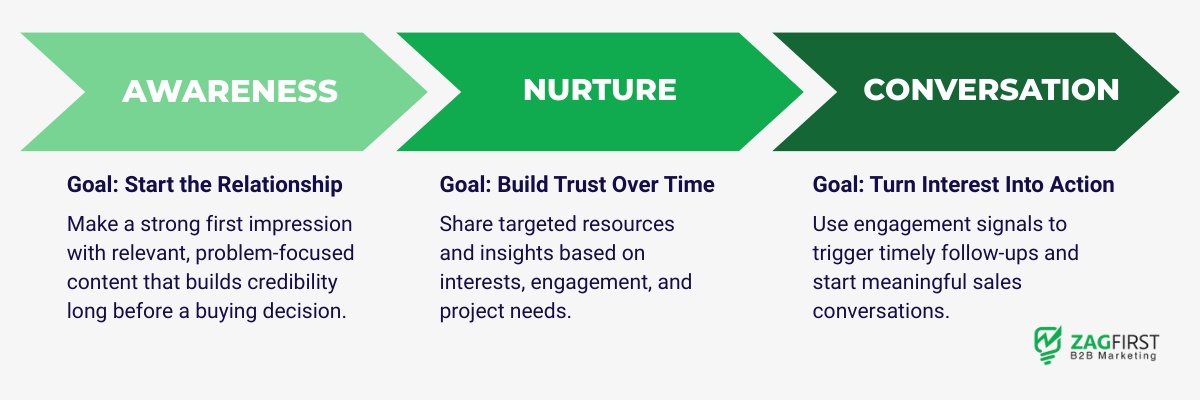
3. Email Campaigns That Nurture Interest
Email remains a reliable way to stay in front of prospects, especially for longer decision cycles.
- Segment your lists: Separate general inquiries from high-priority leads like project planners or repeat contacts.
- Automate follow-ups: Set timely messages that keep contacts moving forward without manual effort.
- Coordinate with CRM: Sync your email data with customer records to see full interaction history.
- Measure and refine: Watch open and response rates to adjust content and timing.
For example, sending a brief project insight or industry update every few weeks keeps you in front of decision-makers without overwhelming their inbox.
4. Paid Search for Active Interest
When someone is actively searching for services, paid search helps you show up where organic reach may lag.
- Clear keyword focus: Use terms that reflect real project needs (e.g., “commercial roofing contractor near me”).
- Compelling landing pages: Match your ad message with clear next steps and contact points.
- Budget discipline: Monitor cost per lead and adjust bids or keywords accordingly.
- Performance tracking: Use analytics to understand which searches convert to contacts.
Paid ads can be especially useful when entering new regions or service lines where organic traction is still developing.
Final Thoughts
Effective lead generation isn’t about following the latest tactic; it’s about connecting with the right prospects using clear, measurable strategies. A mix of targeted content, disciplined outreach, and ongoing tracking gives construction firms a reliable pipeline and better visibility into what’s actually driving new inquiries.
Frequently Asked Questions About Lead Generation for Construction
Get a Lead Generation Plan Designed for Construction Companies
Reach out to ZAG FIRST B2B Marketing to discuss a strategic approach to lead generation tailored to your industry.