

Developing a Marketing Strategy for Manufacturers: Best Practices
A practical guide to developing a marketing strategy for manufacturers, covering the difference between strategy and tactics, key objectives, and how to align marketing efforts with business growth.

Table of Contents
Written By: Matthew Barksdale
- What Is A Marketing Strategy For Manufacturers?
- Strategy vs. Tactics in Marketing for Manufacturing
- Strategy: The ‘What’ and ‘Why’
- Tactics: The ‘How’
- The Imperative for Manufacturing Companies to Create a Marketing Strategy
- Why Marketing Strategy is a Key Pillar of Success in Manufacturing
- Understanding the Manufacturing Audience from a Strategic Lens
- The Crucial Nature of Defining Marketing Objectives Within the Strategy
- How Strategies Fail and Overcoming These Pitfalls
In manufacturing, competition and the market can shift without warning, so an effective marketing strategy is crucial for success. But what is a marketing strategy, and why is it so important for the success of your company’s marketing efforts? In this article, we’ll dive into the details of marketing strategies for manufacturers and what you need to know about them.
What Is A Marketing Strategy For Manufacturers?
At its core, a marketing strategy is a comprehensive plan that will help you achieve your specific marketing goals, which in turn will help you achieve your business goals. A marketing strategy is the blueprint that guides marketing activities and connects these activities with the broader business goals. While a business strategy is designed to chart the course for your entire business, a marketing strategy does the same, but is focused on specifically driving success using marketing tactics and deliverables.
Strategy vs. Tactics in Marketing for Manufacturing
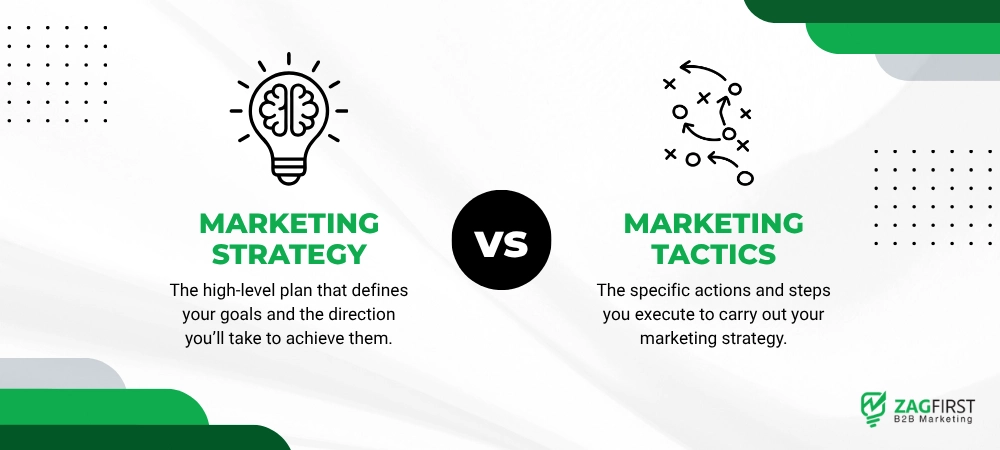
Before we dive into the details of the strategy, it’s important to understand the difference between a marketing strategy and marketing tactics. While the strategy is the broad, big-picture plan for marketing initiatives, marketing tactics are specific actions and tools that are laid out within the strategy.
Strategy: The ‘What’ and ‘Why’
Lead Generation
The primary goal here is to attract potential customers or prospects. This could be done by driving awareness, capturing interest, or encouraging contact about your manufacturing services or products.
Lead Nurturing
Once leads are generated, they might not be ready to buy immediately. Nurturing objectives focus on building and maintaining a relationship with potential clients. It aims to guide them through the decision-making process, ensuring they stay connected and engaged with your brand until they’re ready to make a purchase.
Generating Website Traffic
In the modern digital age, a manufacturer’s online presence is crucial. This objective would focus on drawing more visitors to your website, aiming to convert this traffic into tangible leads or direct sales.
Brand Positioning
This strategy is all about carving a unique space in the market for your brand. For instance, you might focus on positioning your manufacturing business as the industry’s most innovative or the most environmentally friendly.

Tactics: The ‘How’
Tactics are the practical steps you take and the tools you use to implement your strategy. For example:
SEO (Search Engine Optimization)
For a strategy centered on generating website traffic, SEO is an invaluable tool. This can involve optimizing site content for keywords, improving site speed, or ensuring mobile-friendliness.
Content Marketing
If lead nurturing is your strategic objective, content marketing can be very effective. Sharing insightful blog articles, whitepapers, or even video demonstrations can keep potential clients engaged and informed.
Google Ads / Paid Search
If you’re focused on lead generation, using paid search ads to target specific keywords related to your manufacturing products or services is a great tactic.
LinkedIn Marketing
LinkedIn for the manufacturing industry can be an important channel for generating leads. LinkedIn is a great place to get your message in front of decision-makers in your targeted industries and stay top-of-mind for potential leads.
Email Marketing
As part of a lead nurturing strategy, periodic emails updating prospects on new products, company news, or even sharing useful industry content can help keep the lead warm and gradually push them through the sales process.
In marketing for manufacturing companies, strategy and tactics work hand-in-hand. The strategy provides the direction and vision, while tactics pave the specific path to achieving that vision.

The Imperative for Manufacturing Companies to Create a Marketing Strategy
While many manufacturers may still rely heavily on traditional sales methods, referrals, or word-of-mouth, the digitization of the modern world means that these companies are likely to get left behind. A digital marketing strategy allows manufacturers to outperform their competitors, adapt to market shifts, and chart a clear path toward sustainable growth. In addition to keeping up with modern times, a tailored strategy ensures that the right message reaches the right audience and highlights the intricacies of manufacturing and the unique value propositions companies have to offer.

Why Marketing Strategy is a Key Pillar of Success in Manufacturing
The manufacturing sector deals with ever-evolving dynamics, intricate supply chains, and growing competition. With this in mind, it’s important to have a methodical approach to marketing. Here’s what makes a well-defined marketing strategy essential:
- Direction & Clarity: A strategy aligns your marketing activities with your goals, ensuring that every move has purpose and moves you closer to your goals.
- Brand Reputation: In a sea of manufacturers, how does a company stand out? A marketing strategy helps you figure out how to establish and fortify your brand’s identity, fostering loyalty, ensuring repeat business, and attracting referrals.
- Resource Optimization: Every business has finite resources. A strategy helps make sure that every dollar and every hour spent brings maximum value and drives optimal returns.
- Competitive Advantage: By having a clear strategy, manufacturers can identify and utilize unique market opportunities before competitors or respond more effectively to competitive threats.
- Adaptability: Markets change, technologies evolve, and customer preferences shift. A dynamic marketing strategy ensures manufacturers remain relevant and proactive during periods of change.
- Targeted Messaging: With a marketing strategy, manufacturers can ensure their messaging is targeted and relevant. This means communicating the right message to the right audience, at the right time, to increase the chances of engagement and conversion.
- Performance Analysis: A defined strategy provides metrics for measuring performance. It provides clarity on what’s working, what’s not, and where adjustments are needed.
- Long-Term Vision: While tactics might change, the strategy provides a long-term vision and direction, ensuring continuity and a roadmap for future growth.

Understanding the Manufacturing Audience from a Strategic Lens
In the manufacturing industry, it’s important to understand your audience and the nuances of what they’re looking for when researching manufacturers to partner with. Instead of generalizing your audience, a marketing strategy helps you identify specific audiences, what they need, what their preferences are, which pain points to address, and what messaging would be most effective to reach them.
The Crucial Nature of Defining Marketing Objectives Within the Strategy
The key to an effective marketing strategy for manufacturing companies is defining objectives in detail. These objectives are not just lofty dreams that you would like to achieve someday – they are attainable goals that are the guiding compass for all subsequent marketing activities. They answer the question, “What do we aim to achieve?”
Jumping headlong into marketing activities or tactics without taking the time to lay out your marketing and business goals is like going on a road trip without a map. You can easily get lost, waste time and resources, and quickly break down communication within your teams. On the other hand, dedicating the time to define your marketing objectives and connect them with tactics by creating a marketing strategy ensures that every effort moves your business toward tangible results. In essence, before considering how to begin marketing, businesses must understand why and how they’re marketing.
How Strategies Fail and Overcoming These Pitfalls
Despite best intentions, not all strategies yield the desired results. Common pitfalls include a disconnect between strategy and actionable tactics, a strategy that doesn’t allow your business to change, or a failure to utilize and adjust your tactics based on feedback, data, or metrics. Overcoming these hurdles requires that your marketing is based on continuous learning and a commitment to refining the approach. Remember, a strategy should never be set in stone; it’s a dynamic blueprint that evolves with the market, trends, and business needs.
In the competitive world of manufacturing, a comprehensive marketing strategy for manufacturers isn’t just a tool; it’s the roadmap for driving growth, innovation, and success. Whether you’re a seasoned manufacturer or an emerging business, investing time and resources in developing a tailored marketing strategy is paramount.
Ready to elevate your manufacturing business with a results-driven marketing strategy?
At ZAG FIRST, we specialize in crafting manufacturing industry-tailored strategic approaches, ensuring you stay ahead of the curve. Connect with us today!